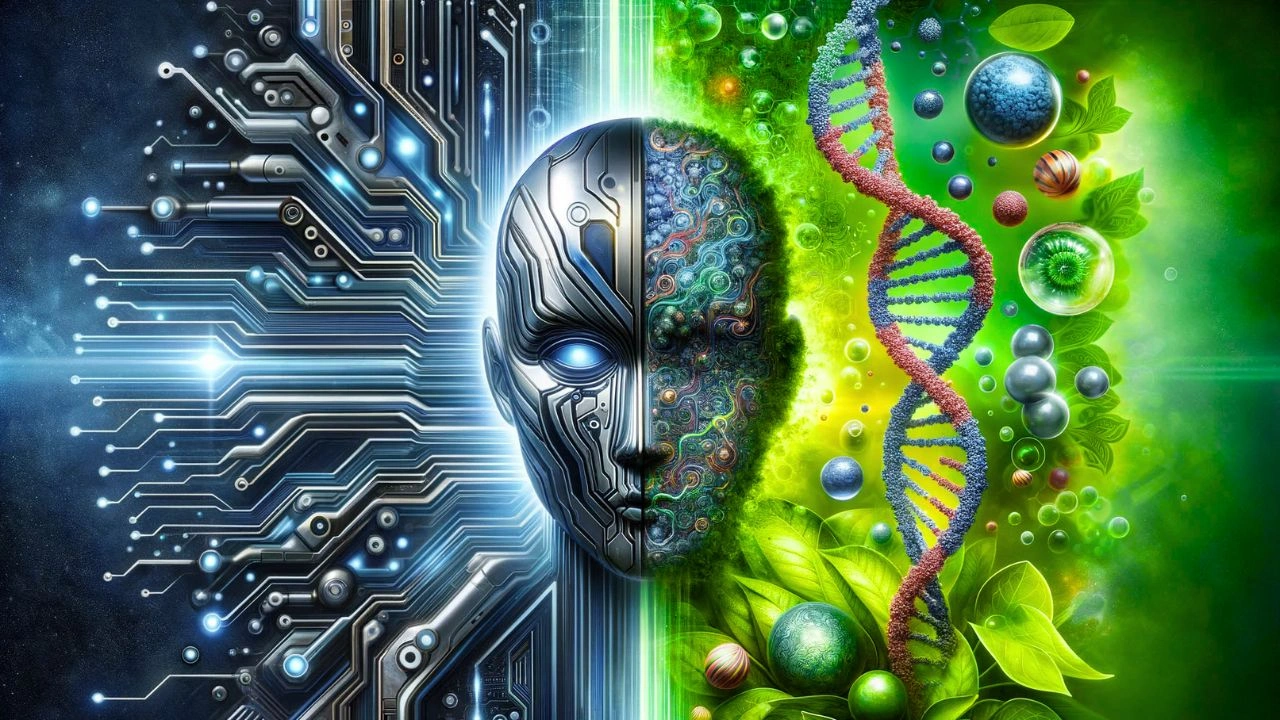
Bio-AI Fusion: The boundary between technology and biology is rapidly dissolving. What once belonged to science fiction—machines that understand, interact with, and even enhance the human body—is now becoming scientific reality. At the heart of this transformation lies Bio-AI fusion, a powerful convergence of artificial intelligence and human biology that is reshaping healthcare, neuroscience, genetics, and the very definition of what it means to be human.
Bio-AI fusion refers to the integration of intelligent algorithms with biological systems to analyze, predict, assist, and sometimes augment biological functions. From AI systems that decode genetic data to neural interfaces that translate thoughts into digital commands, this fusion is unlocking unprecedented capabilities. Yet, alongside its promise, it raises profound ethical, social, and philosophical questions.
This article explores how AI is merging with human biology, the technologies driving this shift, its real-world applications, ethical challenges, and what the future may hold.
The Foundation of Bio-AI Fusion
Human biology is extraordinarily complex. Every second, the body generates vast amounts of data—from neural signals and heart rhythms to genetic expressions and biochemical reactions. Traditional scientific tools struggle to process this information at scale. Artificial intelligence, however, thrives in such environments.
AI excels at recognizing patterns within massive datasets. Machine learning models can analyze biological data that would take human researchers decades to interpret. By identifying relationships between genes, proteins, cells, and behaviors, AI enables scientists to understand biological systems in deeper and more holistic ways.
Bio-AI fusion is built on this synergy: biology provides the data, and AI provides the intelligence to interpret and act upon it. Together, they form a feedback loop where machines learn from living systems and, in turn, help optimize them.
Read Also: Jasper AI Review 2025: Features, Pricing, Pros & Cons – Is Jasper Worth It?
AI and the Human Genome
One of the most transformative areas of Bio-AI fusion is genomics. The human genome contains billions of data points, and understanding how genetic variations influence health and disease is an immense challenge.
AI systems analyze genetic sequences to identify mutations linked to inherited diseases, cancer risks, and drug responses. Unlike traditional methods that focus on single genes, AI can examine interactions across the entire genome.
This capability has accelerated progress in:
- Identifying rare genetic disorders
- Predicting disease susceptibility
- Understanding how genes interact with environmental factors
By learning from large genomic datasets, AI helps move medicine away from generalized treatment toward precision and personalization.
Personalized Medicine and AI-Driven Healthcare
Personalized medicine is one of the most practical outcomes of Bio-AI fusion. Rather than treating patients based on population averages, AI enables therapies tailored to individual biological profiles.
AI systems combine genetic data, medical history, lifestyle factors, and real-time health metrics to recommend personalized treatment plans. In oncology, for example, AI can help determine which cancer therapies are most likely to be effective for a specific patient based on tumor genetics.
This approach offers several advantages:
- Higher treatment success rates
- Reduced side effects
- Earlier disease detection
- Lower long-term healthcare costs
By aligning treatment with biology, AI transforms healthcare from reactive to predictive and preventive.
AI in Drug Discovery and Development
Drug development has historically been slow, expensive, and uncertain. Many promising compounds fail late in clinical trials, costing years of effort and billions of dollars.
AI has dramatically changed this landscape. Machine learning models can simulate how molecules interact with biological targets, predict toxicity, and optimize chemical structures before laboratory testing even begins.
Through Bio-AI fusion, researchers can:
- Identify potential drug candidates faster
- Repurpose existing drugs for new conditions
- Predict adverse reactions early
- Reduce reliance on animal testing
This acceleration is especially critical during global health emergencies, where rapid drug discovery can save millions of lives.
Neurotechnology and Brain-Machine Interfaces
Perhaps the most striking example of Bio-AI fusion is found in neurotechnology. The human brain is an electrical and chemical network of staggering complexity. AI has become an essential tool for decoding its signals.
Brain-machine interfaces (BMIs) use AI algorithms to translate neural activity into digital commands. These systems allow individuals with paralysis to control robotic limbs, type messages, or interact with computers using thought alone.
AI enables these interfaces to adapt to individual brain patterns, improving accuracy over time. Beyond therapeutic use, neurotechnology holds the potential to enhance memory, attention, and cognitive performance.
However, the idea of merging AI with the brain also raises deep concerns about identity, autonomy, and mental privacy.
Wearable and Implantable AI Systems
Bio-AI fusion is not limited to hospitals or research labs. Wearable and implantable devices are bringing AI directly into everyday life.
Smart wearables use AI to monitor heart rate, sleep patterns, oxygen levels, and physical activity. These systems provide real-time feedback and can detect early warning signs of illness before symptoms appear.
Implantable AI-powered devices, such as adaptive pacemakers or insulin delivery systems, respond dynamically to the body’s needs. By continuously learning from biological signals, they improve treatment outcomes and patient quality of life.
These technologies represent a shift from episodic care to continuous health optimization.
Regenerative Medicine and Tissue Engineering
Regenerative medicine aims to repair or replace damaged tissues and organs. AI plays a crucial role in understanding how cells grow, differentiate, and interact.
By analyzing cellular behavior, AI helps researchers design better scaffolds for tissue growth, optimize stem cell differentiation, and predict how engineered tissues will integrate with the body.
In the future, Bio-AI fusion could enable:
- Lab-grown organs customized for individual patients
- Faster recovery from injuries
- Reduced organ transplant shortages
The combination of AI and biology is accelerating the dream of restoring the body from within.
Human Augmentation and Enhancement
Beyond healing, Bio-AI fusion opens the door to enhancement. AI-assisted technologies may improve physical strength, sensory perception, or cognitive capacity.
Examples include:
- AI-controlled prosthetics that move like natural limbs
- Visual or auditory enhancements for sensory impairments
- Cognitive support systems that assist memory or focus
While these advancements can significantly improve quality of life, they also blur the line between therapy and enhancement. This raises questions about fairness, access, and what constitutes a “normal” human ability.
Ethical Challenges of Bio-AI Fusion
As AI becomes intertwined with human biology, ethical considerations grow increasingly urgent. One major concern is data privacy. Biological data—especially genetic and neural information—is deeply personal and highly sensitive.
Unauthorized access or misuse of such data could lead to discrimination, surveillance, or loss of autonomy. Safeguarding biological data must be a central priority in Bio-AI development.
Another issue is consent. When AI systems continuously learn from biological signals, individuals must retain control over how their data is collected and used.
There is also the risk of inequality. Advanced Bio-AI technologies may be expensive and inaccessible to large segments of the global population, potentially widening existing health and social gaps.
Regulation and Governance
The rapid pace of Bio-AI innovation has outstripped existing regulatory frameworks. Traditional approval processes were not designed for systems that evolve through machine learning.
Effective governance must address:
- Safety and reliability of AI-biological systems
- Transparency in algorithmic decision-making
- Clear accountability for errors or harm
- Long-term societal impacts
International collaboration will be essential, as Bio-AI technologies do not respect national boundaries.
The Future of Bio-AI Fusion
Looking ahead, Bio-AI fusion is likely to become more seamless and pervasive. AI systems will grow more explainable, adaptive, and integrated with biological processes.
Potential future developments include:
- AI-guided synthetic biology
- Fully autonomous diagnostic systems
- Neural-AI symbiosis for cognitive support
- Personalized biological enhancement
As these technologies mature, society will face choices about how far integration should go. The future of Bio-AI fusion will not be determined by technology alone, but by human values, ethics, and collective decision-making.
Read Also: ChatGPT Review 2025: Features, Pricing, Pros & Cons – Is It Worth Using?
Redefining the Relationship Between Humans and Machines
Bio-AI fusion challenges long-standing distinctions between humans and machines. When AI systems can learn from our biology and influence our bodies and minds, technology becomes less external and more intimate.
This shift forces us to reconsider ideas of identity, agency, and responsibility. Rather than viewing AI as a separate tool, we may come to see it as a collaborator in human evolution.
The key question is not whether Bio-AI fusion will continue—it already is—but how it will be guided. With thoughtful design, strong ethics, and inclusive access, it has the potential to enhance human well-being on a global scale.
Conclusion – Bio-AI Fusion
Bio-AI fusion represents one of the most significant scientific transformations of the modern era. By merging artificial intelligence with human biology, researchers are unlocking new possibilities in medicine, neuroscience, and human augmentation.
This convergence offers extraordinary benefits: earlier disease detection, personalized treatments, restored mobility, and enhanced quality of life. Yet it also demands careful consideration of ethics, privacy, and equity.
Ultimately, Bio-AI fusion is not just about smarter machines or healthier bodies—it is about redefining the future of humanity itself. Whether this future is empowering or divisive depends on how responsibly we shape the technologies that now shape us.