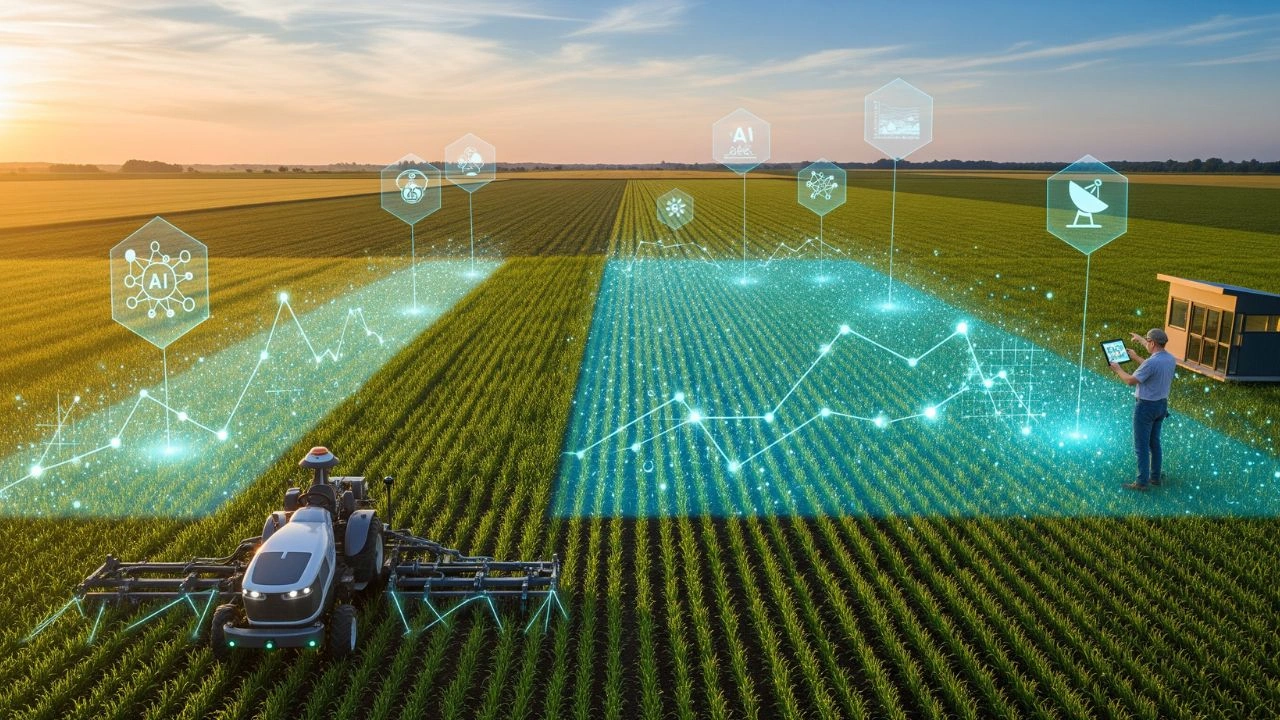
AI helps farmers increase crop yield: Agriculture has always depended on experience, intuition, and nature. But today, farmers face increasing challenges—climate change, unpredictable weather, water scarcity, rising input costs, soil degradation, and growing global food demand. Traditional farming methods alone are no longer enough to meet these pressures.
This is where Artificial Intelligence (AI) is making a powerful difference. By analysing data from fields, weather systems, soil sensors, and satellites, AI helps farmers make smarter decisions that directly increase crop yield and reduce losses.
This article explains how AI helps farmers increase crop yield, the tools being used today, real-world benefits, challenges, and why AI-driven agriculture is essential for the future of food security.
What Does AI Mean in Agriculture?
AI in agriculture refers to the use of intelligent software systems that can:
- Analyze large volumes of farming data
- Identify patterns humans may miss
- Predict outcomes such as yield, disease, or weather impact
- Recommend precise actions
AI does not replace farmers—it empowers them with better insights and decision-making tools.
Read Also: How AI Learns: The Science of Machine Learning Explained
Why Crop Yield Optimization Is More Important Than Ever
Global food demand is rising rapidly, while arable land is limited. Increasing crop yield sustainably is critical.
Major Factors Affecting Crop Yield:
- Soil health
- Weather variability
- Pest and disease outbreaks
- Irrigation efficiency
- Fertilizer use
- Crop management timing
AI addresses all these factors in an integrated and data-driven way.
Precision Farming: The Foundation of AI-Driven Yield Growth
What Is Precision Farming?
Precision farming uses AI and data to manage crops at a micro level, instead of treating an entire field the same way.
How AI Enables Precision Farming:
- Field mapping using satellite images
- Soil variability analysis
- Crop health monitoring
- Targeted input application
This approach ensures every plant receives exactly what it needs, improving yield and reducing waste.
AI-Powered Soil Analysis and Management
Understanding Soil Health
Soil quality directly affects plant growth. AI systems analyze:
- Soil moisture levels
- Nutrient content
- pH balance
- Organic matter
How AI Improves Yield Through Soil Management:
- Recommends optimal fertilizers
- Prevents overuse of chemicals
- Enhances nutrient absorption
Healthy soil leads to healthier crops and higher yields.
Smart Irrigation Systems Powered by AI
The Water Challenge
Over-irrigation wastes water and harms crops, while under-irrigation reduces yield.
How AI Optimizes Irrigation:
- Uses weather forecasts
- Monitors soil moisture sensors
- Predicts crop water requirements
AI ensures the right amount of water reaches crops at the right time, improving growth and conserving resources.
AI-Based Weather Prediction for Better Farming Decisions
Weather is one of the most unpredictable factors in agriculture.
AI Weather Analytics Help Farmers:
- Predict rainfall and droughts
- Prepare for heat stress or frost
- Plan sowing and harvesting
Accurate weather predictions allow farmers to take preventive action instead of reacting to losses.
Crop Health Monitoring with AI and Computer Vision
Seeing What the Human Eye Cannot
AI-powered cameras and drones analyze crops for:
- Nutrient deficiencies
- Water stress
- Growth irregularities
Benefits for Yield:
- Early detection of problems
- Faster corrective measures
- Reduced crop damage
Early intervention is key to maximizing yield.
AI in Pest and Disease Detection
One of the Biggest Yield Threats
Pests and diseases can destroy crops quickly if not detected early.
How AI Helps:
- Identifies pest infestations from images
- Detects disease symptoms in leaves
- Predicts outbreak patterns
AI allows targeted pest control, reducing chemical use while protecting crops.
AI-Driven Fertilizer Optimization
The Fertilizer Efficiency Problem
Excess fertilizer increases costs and damages soil, while insufficient fertilizer reduces yield.
AI Solutions:
- Determines optimal fertilizer type
- Calculates precise application quantity
- Suggests correct timing
This improves nutrient uptake and directly increases crop yield.
Yield Prediction and Harvest Planning with AI
Predicting Yield Before Harvest
AI models analyze:
- Crop growth patterns
- Weather trends
- Soil conditions
They predict expected yield well in advance.
Why This Matters:
- Better market planning
- Reduced storage losses
- Optimized harvest timing
Accurate yield prediction improves both productivity and profitability.
AI and Autonomous Farm Machinery
Smart Equipment for Smart Farming
AI-powered machines perform tasks such as:
- Precision seeding
- Automated spraying
- Robotic harvesting
These machines operate with higher accuracy and consistency, leading to better crop outcomes.
AI-Based Crop Selection and Rotation Planning
Choosing the right crop is crucial.
AI Helps By:
- Analyzing soil and climate suitability
- Suggesting high-yield crop varieties
- Optimizing crop rotation cycles
This ensures long-term soil health and sustained yield growth.
Real-World Examples of AI Increasing Crop Yield
- AI-guided irrigation systems increasing yields by 15–25%
- Drone-based crop monitoring reducing disease losses
- Precision fertilizer tools improving output per acre
These results show AI is not theoretical—it delivers measurable impact.
Economic Benefits for Farmers
Higher yields translate into:
- Increased income
- Lower input costs
- Reduced risk
AI improves farm profitability while supporting sustainability.
Environmental Benefits of AI-Driven Farming
AI-enabled agriculture:
- Reduces chemical runoff
- Conserves water
- Protects soil biodiversity
This creates a balance between productivity and environmental responsibility.
Challenges of Using AI in Agriculture
Despite its benefits, challenges exist.
Common Challenges:
- Initial investment cost
- Access to digital infrastructure
- Data literacy among farmers
- Connectivity issues in rural areas
Governments and agri-tech companies are actively working to overcome these barriers.
Read Also: ChatGPT vs Jasper AI 2025: Which AI Writing Tool Is Better for You?
The Future of AI in Crop Yield Optimization
The future includes:
- Fully autonomous farms
- AI-driven climate-resilient crops
- Real-time decision support systems
- Integration with IoT and robotics
AI will play a central role in feeding a growing global population.
How Farmers Can Start Using AI Today
Farmers can begin by:
- Using AI-enabled mobile apps
- Adopting smart irrigation tools
- Leveraging satellite-based crop monitoring
- Partnering with agri-tech providers
Small steps can lead to significant yield improvements.
Conclusion: AI Is Transforming the Future of Farming
AI is not replacing traditional farming wisdom—it is enhancing it. By combining experience with data-driven intelligence, AI helps farmers increase crop yield, reduce losses, and farm sustainably.
As climate and economic challenges grow, AI-powered agriculture offers hope, resilience, and food security for the future.