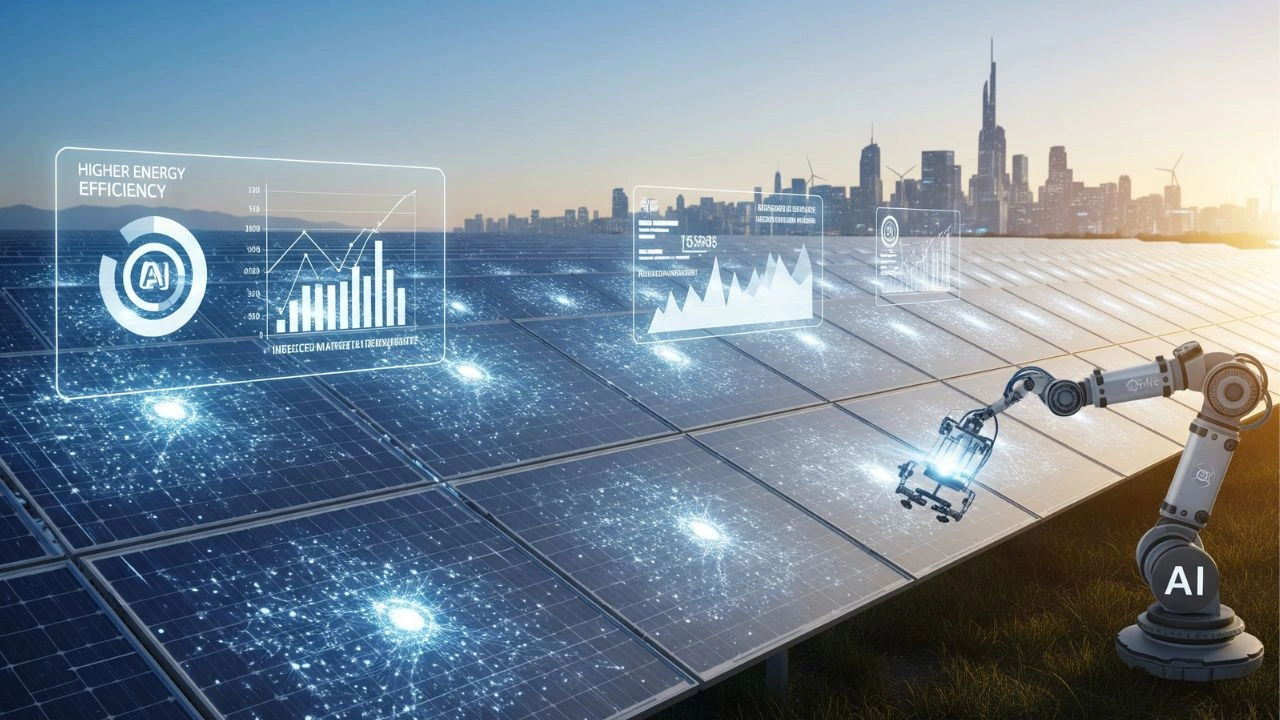
AI increases efficiency in solar panels: Solar energy is central to the global transition toward clean and sustainable power. However, installing solar panels alone does not guarantee maximum energy generation. Real-world factors such as weather changes, dust accumulation, aging equipment, shading, and grid limitations can significantly reduce output.
This is where artificial intelligence (AI) plays a transformative role. By continuously analyzing data and making intelligent decisions, AI increases the efficiency of solar panels far beyond what traditional systems can achieve.
In this article, we explore how AI improves solar panel efficiency, the technologies behind it, real-world applications, benefits, challenges, and what the future holds for AI-powered solar energy systems.
Understanding Solar Panel Efficiency
Solar panel efficiency refers to the percentage of sunlight converted into usable electricity. Most commercial solar panels operate between 15% and 22% efficiency under ideal conditions.
Factors That Affect Efficiency:
- Sunlight intensity
- Temperature
- Dust and dirt
- Panel orientation
- Shading
- Equipment health
Even minor inefficiencies can lead to significant energy losses over time, especially in large solar installations.
Read Also: AI SEO Tools That Help Rank Blog Posts Faster in 2025
The Role of AI in Solar Energy Systems
AI acts as the brain of modern solar systems, processing massive volumes of data from panels, inverters, weather sources, and grids.
Core AI Capabilities:
- Pattern recognition
- Predictive analytics
- Real-time optimization
- Autonomous decision-making
By combining these capabilities, AI ensures solar panels operate at peak performance every moment of the day.
AI-Powered Solar Monitoring Systems
Real-Time Performance Tracking
AI monitors each solar panel individually, tracking:
- Power output
- Temperature
- Voltage and current
- Efficiency deviations
When performance drops below expected levels, AI immediately identifies the cause.
Benefits:
- Faster issue detection
- Reduced energy loss
- Improved reliability
Traditional monitoring may take days—AI does it in seconds.
Predictive Maintenance: Preventing Efficiency Loss
Why Maintenance Impacts Efficiency
Worn components, faulty inverters, or microcracks in panels can silently reduce output.
How AI Predicts Failures
AI analyzes:
- Historical maintenance data
- Equipment aging patterns
- Performance anomalies
It predicts failures before they happen, allowing timely intervention.
Efficiency Gains:
- Less downtime
- Longer panel lifespan
- Consistent energy output
AI and Computer Vision for Panel Inspection
Automated Visual Analysis
Drones equipped with AI-powered cameras inspect solar panels for:
- Cracks
- Hot spots
- Delamination
- Dirt and bird droppings
Why This Matters
Manual inspections are slow and error-prone. AI detects even microscopic defects, preventing efficiency loss early.
Smart Cleaning Optimization Using AI
The Dust Problem
Dust accumulation can reduce panel efficiency by up to 30% in certain regions.
AI-Driven Cleaning Schedules
AI evaluates:
- Dust levels
- Weather forecasts
- Cost-benefit analysis
It determines when and where cleaning is actually needed, avoiding unnecessary water and labor usage.
AI-Based Solar Tracking Systems
Optimizing Panel Orientation
Solar tracking systems adjust panel angles to follow the sun.
How AI Improves Tracking:
- Predicts optimal tilt angles
- Adapts to weather conditions
- Minimizes mechanical wear
AI-powered trackers can increase energy yield by 20–40% compared to fixed systems.
AI-Enhanced Solar Forecasting
Predicting Solar Output Accurately
AI combines:
- Weather data
- Satellite imagery
- Historical performance
It forecasts power generation with high precision.
Efficiency Benefits:
- Better energy planning
- Reduced curtailment
- Improved grid stability
Accurate forecasts ensure every unit of solar energy is used effectively.
AI and Inverter Optimization
Inverters convert DC power to AC power. Inefficient inverters waste energy.
AI in Inverters:
- Detects inefficiencies
- Adjusts conversion strategies
- Prevents overloads
This leads to higher energy conversion efficiency and reduced losses.
AI for Energy Storage Optimization
Matching Supply and Demand
AI manages battery systems by:
- Predicting peak generation
- Forecasting demand
- Optimizing charge and discharge cycles
Efficiency Impact:
- Reduced energy wastage
- Extended battery lifespan
- Improved energy availability
Grid Integration and Efficiency Enhancement
Solar and Grid Challenges
Solar energy is variable, while grids require stability.
AI’s Role:
- Load balancing
- Voltage control
- Demand response optimization
AI ensures maximum solar energy reaches consumers without grid disruptions.
Digital Twins: Simulating Efficiency Improvements
What Is a Digital Twin?
A digital twin is an AI-powered virtual model of a solar system.
How It Improves Efficiency:
- Tests performance scenarios
- Identifies bottlenecks
- Optimizes system design
This allows continuous improvement without real-world risk.
AI in Solar Panel Manufacturing
Efficiency improvements begin before installation.
AI in Manufacturing:
- Detects material defects
- Optimizes cell design
- Improves quality control
Higher-quality panels translate into higher long-term efficiency.
Real-World Results: Efficiency Gains from AI
Studies and field data show:
- 5–10% efficiency increase through monitoring
- 10–20% gain from predictive maintenance
- Up to 40% increase with AI solar tracking
Combined, AI can dramatically boost overall solar performance.
Economic Benefits of AI-Driven Efficiency
Higher efficiency means:
- Increased energy output
- Faster ROI
- Lower operational costs
AI ensures solar investments deliver maximum financial returns.
Environmental Impact of Improved Efficiency
AI-driven efficiency:
- Reduces land use
- Minimizes resource waste
- Maximizes clean energy generation
This accelerates carbon reduction goals worldwide.
Challenges of Using AI in Solar Systems
Despite its benefits, challenges exist.
Key Challenges:
- Initial investment costs
- Data quality and integration
- Skilled workforce requirements
- Cybersecurity risks
Proper planning ensures these challenges are manageable.
The Future of AI in Solar Panel Efficiency
Future developments include:
- Self-healing solar systems
- Fully autonomous solar farms
- AI-powered microgrids
- Real-time global energy optimization
AI will continue to push solar efficiency to new heights.
Read Also: Best ChatGPT Alternatives 2025: Top AI Tools Compared for Writing & Productivity
What Solar Owners and Operators Should Do Today
To benefit from AI:
- Invest in smart monitoring systems
- Upgrade inverters and trackers
- Use AI-driven maintenance tools
- Train teams in data-driven operations
Early adopters gain long-term efficiency advantages.
Final Thoughts: AI Is the Key to Smarter Solar Energy
AI does not change how solar panels generate electricity—it changes how intelligently that electricity is captured, managed, and used.
By increasing efficiency at every stage, AI ensures solar energy reaches its full potential, making clean power more reliable, affordable, and scalable.
The future of solar is not just renewable—it’s intelligent.
3 thoughts on “How AI Increases Efficiency in Solar Panels and Maximizes Clean Energy Output”