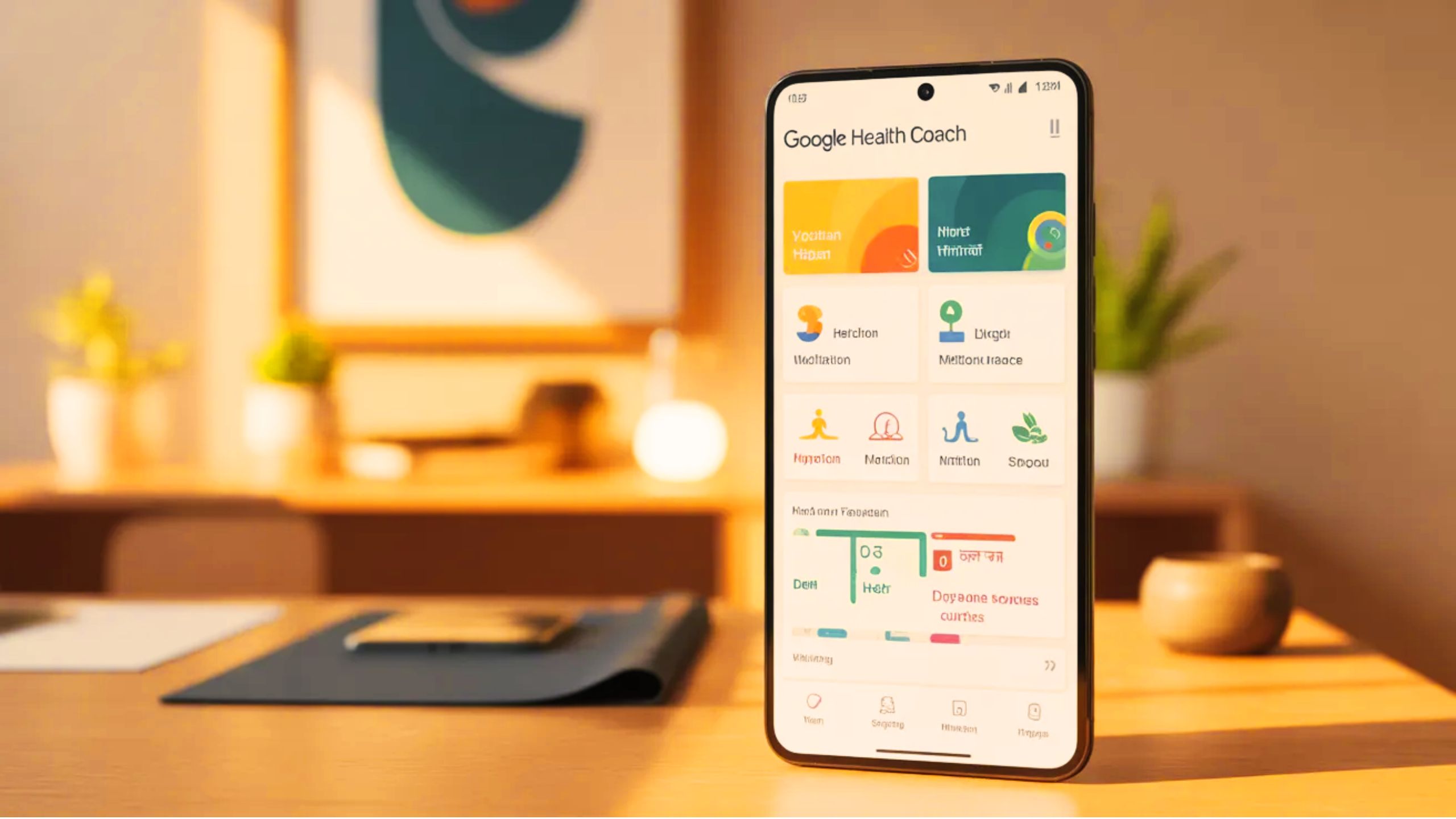
Google Health Coach India: Google has officially introduced its AI-powered health assistant, Google Health Coach, in India, marking one of the company’s most ambitious moves in the digital wellness industry. At the same time, the familiar Fitbit app is being rebranded into a broader platform called Google Health, signaling a major shift in how Google wants users to experience fitness, sleep tracking, nutrition, and preventive healthcare.
The launch comes at a time when millions of Indians are becoming increasingly health-conscious. From wearable devices and calorie trackers to meditation apps and AI fitness planners, digital health tools are no longer niche products. They have become part of daily life for students, professionals, athletes, and even senior citizens.
Google’s latest move is important because it combines artificial intelligence, wearable technology, and personalized healthcare guidance into one ecosystem. Unlike traditional fitness apps that simply count steps or calories, Google Health Coach aims to become a proactive wellness companion that understands user behavior, predicts needs, and provides real-time recommendations.
This article explains everything users need to know about Google Health Coach in India, including features, pricing, benefits, privacy concerns, real-world usefulness, and how it compares with competitors.
What Is Google Health Coach?
Google Health Coach is an AI-powered digital wellness assistant integrated into the newly rebranded Google Health app. It uses data from Fitbit devices, Android smartphones, sleep patterns, workout routines, nutrition habits, and other health indicators to provide personalized guidance.
The system is powered by Google’s Gemini AI models, which allow the app to understand context and provide conversational health recommendations instead of generic notifications.
For example, instead of simply telling users they slept poorly, the app may suggest:
- Adjusting bedtime by 30 minutes
- Avoiding caffeine late in the evening
- Trying guided breathing exercises
- Reducing screen exposure before sleep
Similarly, the coach can suggest workout plans based on energy levels, previous activity, heart rate recovery, and recovery time.
The goal is to make wellness guidance smarter, more adaptive, and easier to follow.
Read Also: Emerging Trends and Research Directions in Generative AI: What’s Next in Innovation
Why Google Replaced Fitbit With Google Health
Fitbit has long been recognized as one of the world’s leading fitness tracking platforms. After acquiring Fitbit in 2021, Google slowly began integrating Fitbit’s technology into its broader ecosystem.
The transition from Fitbit to Google Health reflects a strategic shift:
- Fitbit focused mainly on fitness tracking
- Google Health aims to provide a complete wellness ecosystem
The new branding allows Google to combine:
- AI coaching
- Health tracking
- Sleep analysis
- Nutrition support
- Mental wellness tools
- Medical insights
- Wearable integration
This move also aligns with Google’s increasing investments in AI-driven consumer experiences.
Instead of operating Fitbit as a standalone brand forever, Google is positioning health services directly under its own ecosystem, similar to Google Photos, Google Maps, and Google Workspace.
Key Features of Google Health Coach in India
Personalized AI Coaching
The biggest attraction of Google Health Coach is its personalized guidance system.
The AI analyzes:
- Daily activity
- Sleep quality
- Stress patterns
- Heart rate trends
- Workout intensity
- Recovery metrics
- Nutrition habits
Based on this information, it delivers tailored recommendations.
This creates a more interactive experience than traditional fitness apps.
Advanced Sleep Insights
Sleep tracking has become one of the most important features in modern wellness apps.
Google Health Coach provides:
- Sleep stage analysis
- Bedtime recommendations
- Sleep consistency tracking
- Smart wake-up guidance
- Recovery scoring
The app can also identify long-term sleep trends and help users improve sleeping habits over time.
For Indian users dealing with stressful work schedules and screen-heavy lifestyles, this feature may become especially valuable.
AI-Powered Workout Recommendations
Unlike static workout plans, Google Health Coach adapts recommendations according to user performance and recovery.
For example:
- Low energy day → light yoga or walking
- High recovery score → strength training suggestions
- Poor sleep → lower workout intensity
This personalized system reduces the risk of overtraining while encouraging consistency.
Nutrition and Meal Suggestions
Google’s AI assistant can recommend healthier eating habits based on user goals.
Potential recommendations include:
- High-protein meal suggestions
- Hydration reminders
- Calorie balance tracking
- Smart snack alternatives
- Nutritional guidance
While it is not intended to replace professional medical nutritionists, it offers practical wellness support for everyday users.
Integration With Wearables
Google Health Coach works seamlessly with:
- Fitbit smartwatches
- Pixel Watch devices
- Android smartphones
This integration allows continuous data tracking throughout the day.
As wearable adoption grows in India, this ecosystem could become increasingly influential.
Conversational Health Assistance
One of the most advanced features is the conversational AI interface.
Users can ask questions like:
- “Why am I feeling tired today?”
- “How can I improve my sleep?”
- “What workout should I do after a poor recovery?”
- “How many calories should I consume today?”
Instead of generic replies, the AI uses personal health data to provide more contextual answers.
This creates a more human-like digital coaching experience.
Google Health Premium Pricing in India
Google Health Coach is included with Google Health Premium, previously known as Fitbit Premium.
Pricing in India:
- ₹99 per month
- ₹999 per year
Compared with many premium fitness applications, this pricing is relatively affordable.
The subscription includes:
- AI coaching
- Advanced sleep analysis
- Guided workouts
- Wellness insights
- Personalized recommendations
For users already invested in Google devices or Fitbit wearables, the subscription may offer strong value.
How Google Health Coach Can Benefit Indian Users
Growing Health Awareness
India has seen a massive increase in health awareness after the pandemic.
People are now paying closer attention to:
- Sleep quality
- Fitness
- Stress management
- Preventive healthcare
- Weight control
Google Health Coach enters the market at a time when demand for digital wellness solutions is rapidly growing.
Busy Urban Lifestyles
Many Indians struggle with:
- Sedentary jobs
- Long commuting hours
- Irregular sleep schedules
- Stress-related fatigue
An AI-driven wellness assistant may help users maintain healthier habits despite busy schedules.
Affordable Digital Wellness
Professional fitness coaching and nutrition consulting can be expensive.
Google Health Coach offers an accessible alternative for users seeking basic guidance without high consultation fees.
Privacy Concerns and Data Protection
Whenever large technology companies handle health information, privacy concerns naturally arise.
Google claims that:
- Health data will not be used for advertising
- Users maintain control over data permissions
- Sensitive wellness information is protected
However, privacy-conscious users may still have concerns because health data is extremely personal.
Important questions include:
- How securely is the data stored?
- Can third parties access the information?
- How transparent are AI recommendations?
- Will future policies change?
Google will need to maintain strong transparency standards to build long-term trust.
How Google Health Coach Compares to Other Health Apps
Apple Health
Apple Health offers strong ecosystem integration for iPhone users but is limited mainly to Apple devices.
Google Health Coach may gain an advantage in India because Android dominates the smartphone market.
Samsung Health
Samsung Health already provides:
- Workout tracking
- Sleep monitoring
- Nutrition logging
However, Google’s Gemini-powered AI coaching may offer more intelligent personalization.
MyFitnessPal
MyFitnessPal is popular for calorie tracking but focuses mainly on nutrition.
Google Health Coach aims to provide a broader wellness ecosystem.
Fitbit Premium
Ironically, Google Health Coach is essentially the evolution of Fitbit Premium.
Existing Fitbit users are likely to experience a smoother transition compared to new users.
The Role of AI in Future Healthcare
Google Health Coach represents a larger shift happening worldwide.
Artificial intelligence is increasingly being used in:
- Preventive healthcare
- Mental wellness
- Personalized medicine
- Fitness optimization
- Sleep science
AI systems can process huge amounts of health data faster than humans, identifying patterns that users may overlook.
In the future, AI wellness systems could potentially:
- Detect health risks earlier
- Recommend preventive action
- Improve habit formation
- Reduce healthcare costs
However, human medical professionals will still remain essential.
AI should support healthcare, not replace doctors.
Potential Limitations of Google Health Coach
Despite its promising features, the platform has limitations.
Not a Medical Replacement
Google Health Coach is a wellness assistant, not a medical diagnostic system.
Users should not rely solely on AI for serious health conditions.
Accuracy Depends on Data Quality
If users:
- Wear devices inconsistently
- Enter incorrect information
- Ignore tracking permissions
Then recommendations may become less accurate.
Subscription Fatigue
Consumers already pay for multiple digital subscriptions.
Some users may hesitate to add another recurring expense.
AI Recommendations Are Still Evolving
Even advanced AI systems can:
- Misinterpret data
- Offer overly generic suggestions
- Lack human emotional understanding
The technology will likely improve over time.
Why This Launch Matters for Google
This launch is strategically important for Google for several reasons.
Expansion Beyond Search
Google wants to move deeper into everyday lifestyle services.
Health and wellness are massive global industries with long-term growth potential.
AI Monetization
Google is heavily investing in AI technologies.
Health coaching provides a real-world use case for monetizing AI assistants beyond chatbots and search tools.
Ecosystem Lock-In
The more users depend on Google Health, Pixel devices, Fitbit wearables, and Android integration, the stronger Google’s ecosystem becomes.
This increases long-term customer retention.
What Users Should Consider Before Subscribing
Before subscribing to Google Health Premium, users should evaluate:
Device Compatibility
The experience works best with Fitbit or Pixel wearable devices.
Fitness Goals
Users seeking advanced athletic training may still prefer specialized apps.
Privacy Comfort Level
Users should review data-sharing permissions carefully.
Consistency
The platform delivers the most value when used regularly.
Read Also: AI Video Automation Tools for Social Media Posting 2026 Guide
The Future of Digital Wellness in India
India is becoming one of the world’s largest digital wellness markets.
Factors driving growth include:
- Rising smartphone penetration
- Affordable wearables
- Increased health awareness
- Expanding internet access
- Younger tech-savvy population
AI-powered health assistants may soon become common household tools.
Google’s launch could encourage other companies to accelerate innovation in the wellness space.
This competition may ultimately benefit consumers through:
- Better features
- Lower pricing
- Smarter AI systems
- Improved accessibility
Conclusion
The launch of Google Health Coach in India marks an important step in the evolution of AI-powered personal wellness.
By transforming the Fitbit app into Google Health, Google is positioning itself as a serious player in the future of preventive digital healthcare.
The platform combines:
- AI intelligence
- Wearable integration
- Personalized coaching
- Wellness tracking
- Conversational guidance
For Indian users looking to improve sleep, fitness, nutrition, and daily wellness habits, Google Health Coach offers a promising and affordable solution.
At the same time, users should remain realistic about its limitations. AI wellness tools are helpful assistants, but they are not substitutes for professional healthcare advice.
If Google can maintain strong privacy standards while continuing to improve personalization accuracy, Google Health Coach could become one of the most influential health platforms in India over the next few years.
As artificial intelligence becomes more deeply integrated into daily life, the future of health management may increasingly shift from reactive treatment to proactive wellness guidance — and Google clearly wants to lead that transformation.